solar energy etiketine sahip kayıtlar gösteriliyor. Tüm kayıtları göster

Cumartesi

Fuel Cells


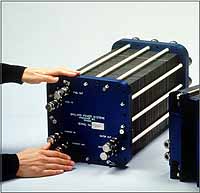
Fuel cells and their ability to cleanly produce electricity from hydrogen and oxygen are what make hydrogen attractive as a "fuel" for transportation use particularly, but also as a general energy carrier for homes and other uses, and for storing and transporting otherwise intermittent renewable energy. Fuel cells function somewhat like a battery—with external fuel being supplied rather than stored electricity—to generate power by chemical reaction rather than combustion. They typically consist of numerous small cells in layers though, rather than a single large one. There are several different types of fuel cells using different catalysts (chemicals, in this case probably metals, that trigger a chemical reaction without themselves being used up by it) and electrolytes (non-metallic conductors of electrical ions, classically in a solution, but for fuel cells more likely in a solid membrane). In one type, for example, however, hydrogen fed to one catalyst-containing electrode splits to a positively charge hydrogen ion (proton) and a negatively charged electron. The positive ions travel through the electrolyte to the other catalyst electrode where they combine with oxygen fed to that electrode—and electrons—to produce water and heat. The necessary electrons are drawn through an electric circuit external to the cell, creating the electrical generation.

NREL's current fuel cell work is primarily on developing durable, less-expensive materials for fuel-cell components. Platinum and other current electrode catalysts are costly (particularly for low-operating-temperature fuel cells) and conditions can be highly corrosive (particularly for high-operating-temperature fuel cells) both for electrodes and membranes. Fuel cell design options and their relation to other vehicle operating systems are quite complex. NREL is also applying its analytical capabilities fuel-cell system analysis to help DOE and industry partners identify critical areas for improvement and the most effective operating parameters for whole vehicle systems.

Wind Turbines


We have been harnessing the wind's energy for hundreds of years. From old Holland to farms in the United States, windmills have been used for pumping water or grinding grain. Today, the windmill's modern equivalent—a wind turbine—can use the wind's energy to generate electricity.

Wind turbines, like windmills, are mounted on a tower to capture the most energy. At 100 feet (30 meters) or more aboveground, they can take advantage of the faster and less turbulent wind. Turbines catch the wind's energy with their propeller-like blades. Usually, two or three blades are mounted on a shaft to form a rotor.

A blade acts much like an airplane wing. When the wind blows, a pocket of low-pressure air forms on the downwind side of the blade. The low-pressure air pocket then pulls the blade toward it, causing the rotor to turn. This is called lift. The force of the lift is actually much stronger than the wind's force against the front side of the blade, which is called drag. The combination of lift and drag causes the rotor to spin like a propeller, and the turning shaft spins a generator to make electricity.


Wind turbines can be used as stand-alone applications, or they can be connected to a utility power grid or even combined with a photovoltaic (solar cell) system. For utility-scale sources of wind energy, a large number of wind turbines are usually built close together to form a wind plant. Several electricity providers today use wind plants to supply power to their customers.

Stand-alone wind turbines are typically used for water pumping or communications. However, homeowners, farmers, and ranchers in windy areas can also use wind turbines as a way to cut their electric bills.

Small wind systems also have potential as distributed energy resources. Distributed energy resources refer to a variety of small, modular power-generating technologies that can be combined to improve the operation of the electricity delivery system.

Çarşamba

Clean Power


Satisfying the world's growing demand for power requires a balanced portfolio of energy options.

The world demands a reliable supply of clean and dependable power. Fuel choices for conversion to power can vary driven by economics, availability and environmental factors. There is no one technology that can ideally meet the power needs of every situation. To help meet these challenges, GE offers one of the most comprehensive portfolios of products for the energy industry. GE offers technology for oil and gas, fossil, nuclear, hydro, solar and wind applications.

From increasing the efficiency of traditional energy systems to developing leading-edge renewable energy sources, we are hard at work, seeking innovative ways to produce efficient and reliable power.

Salı

A Big Energy : General Electric

The Power That Turns the World

More people around the world turn to us for advanced power systems and around-the-clock energy services than any other company. Since we installed our first steam turbine in 1901, our installed base of steam and heavy-duty gas turbines has grown to over 10,000 units, representing over a million Megawatts (MW) of installed capacity in more than 120 countries. With over 5,500 wind and 3,600 hydro turbines, the installed capacity of renewable energy exceeds 160,000 MW.